




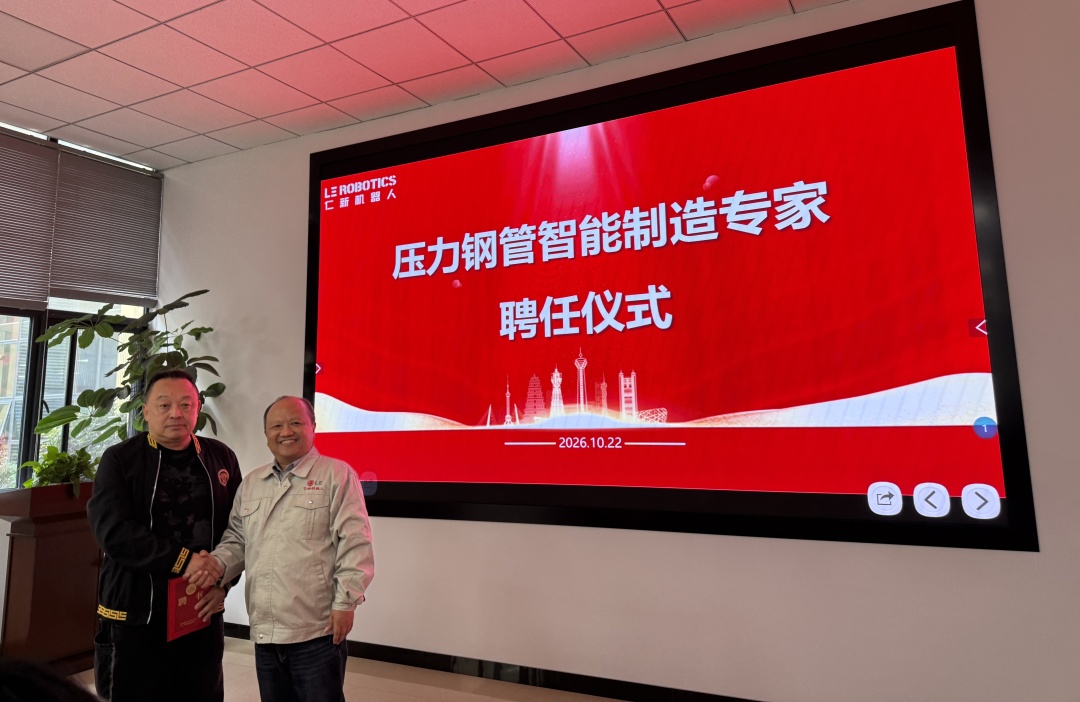
Expert Appointment
National Standards Expert on Steel Penstocks Appointed as Technical Advisor
INDUSTRY OPPORTUNITY
Penstock Manufacturing Enters a New Era of Intelligent Upgrading
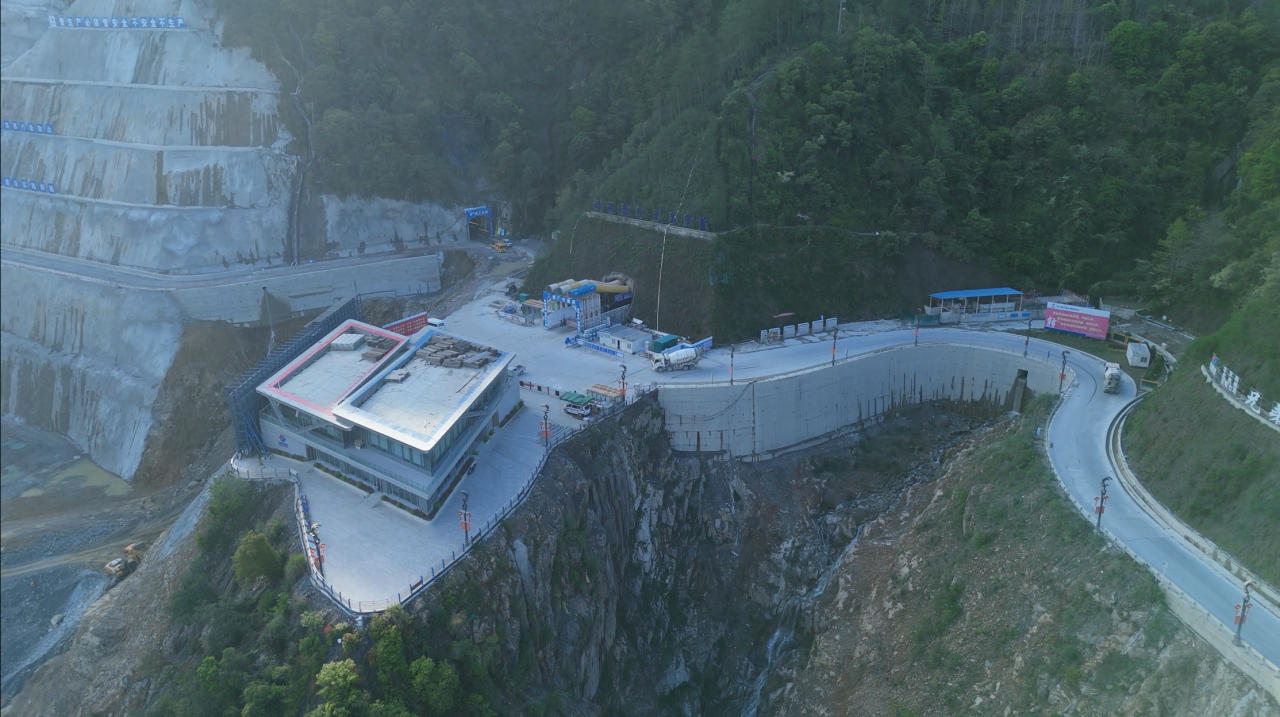
he rapid growth of renewable energy is increasing demand for power regulation and energy storage, accelerating the development of pumped-storage hydropower projects.
According to the National Energy Administration’s Medium- and Long-Term Development Plan for Pumped-Storage Hydropower (2021–2035), China’s total installed pumped-storage capacity is expected to reach approximately 120 million kW (120 GW) by 2030.
The 2025 Annual Report on the Development of the Pumped-Storage Industry, published by the General Institute of Water Resources and Hydropower Planning and Design, shows that by the end of 2025, China had 65.94 million kW (65.94 GW) of pumped-storage capacity in operation and 229 million kW (229 GW) of approved projects under construction.
Based on these figures, the approved capacity under construction is approximately 3.5 times the operational capacity.
Penstocks are critical pressure-bearing structures in the water conveyance systems of conventional hydropower stations and pumped-storage power plants. Their manufacturing and installation quality directly affect the operational safety of these projects. The substantial pipeline of projects under construction indicates that demand for penstock manufacturing and installation will continue to grow.
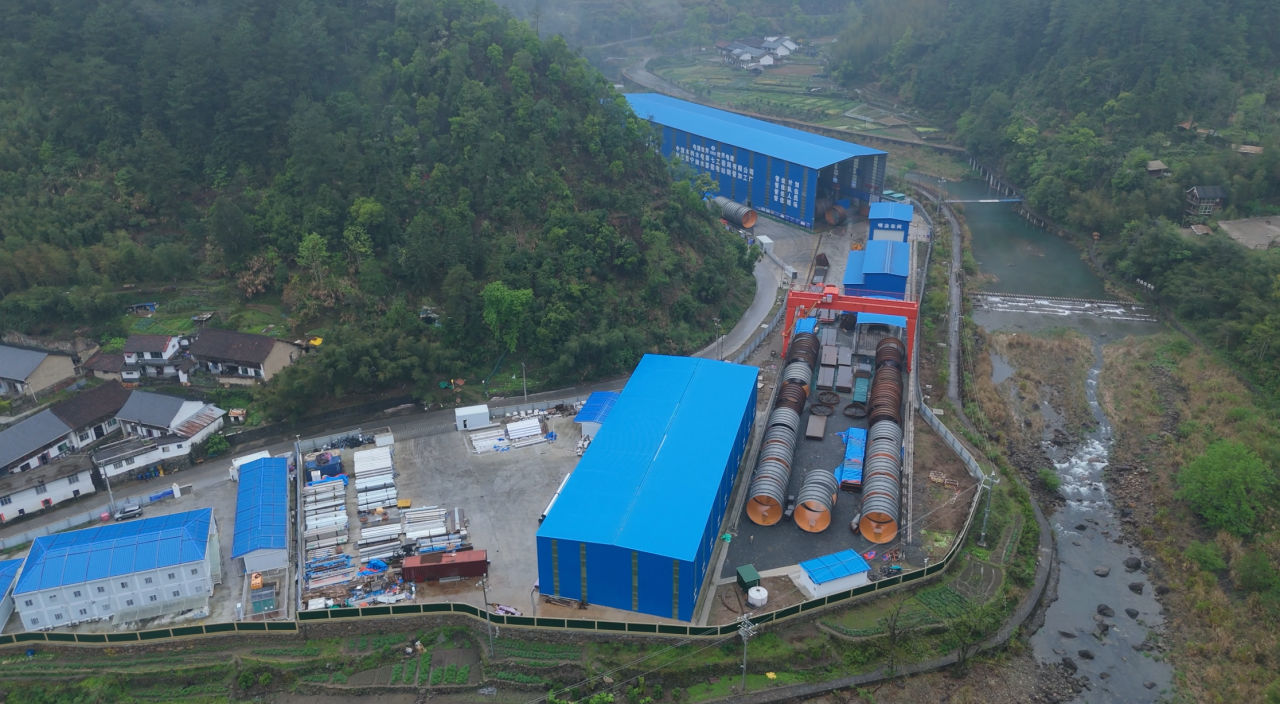
Large-scale penstocks have large diameters and thick walls. High-head hydropower stations commonly use high-strength steel with tensile strength grades of 610 MPa and 780 MPa, while some pumped-storage hydropower projects have already adopted 1,000 MPa-grade high-strength steel.
Welding these materials requires strict control over multiple parameters and procedures, including electrode and flux drying, preheating, interpass temperature, heat input, and post-heating for hydrogen removal. These measures are essential to prevent hydrogen-induced cold cracking and ensure that welded joints meet the required strength, ductility, and toughness standards.
At present, submerged arc welding (SAW) has been widely adopted for shop welding of longitudinal and circumferential seams. However, welders are still required to oversee alignment and adjustments throughout the process. Other operations, including fit-up and positioning, weld root cleaning, stiffening ring welding, and on-site welding inside tunnels, still rely heavily on manual labor.
Combined with a shortage of highly skilled welders and challenging working conditions on site, these factors constrain further improvements in weld quality consistency and production efficiency.
The energy industry standard Technical Specification for Intelligent Welding and Assembly of Penstocks in Hydropower Projects (NB/T 11562—2024), which came into effect on November 24, 2024, provides a dedicated technical framework for intelligent welding and assembly operations.
The intelligent upgrading of penstock manufacturing is not simply about replacing human workers with robots. Rather, it requires systematic coordination among material technologies, welding processes, automation equipment, and engineering quality management.
DELIVERED RESULTS
Product Standardization, Batch Deliveries, and Proven Applications
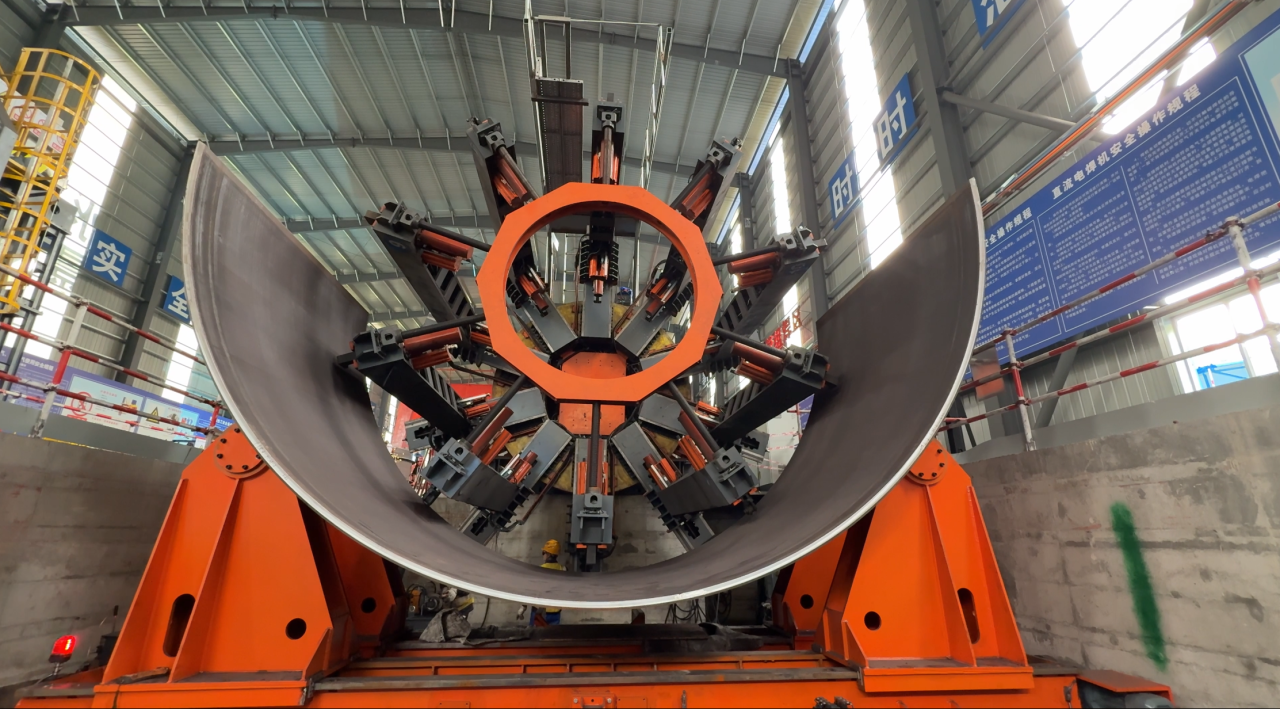
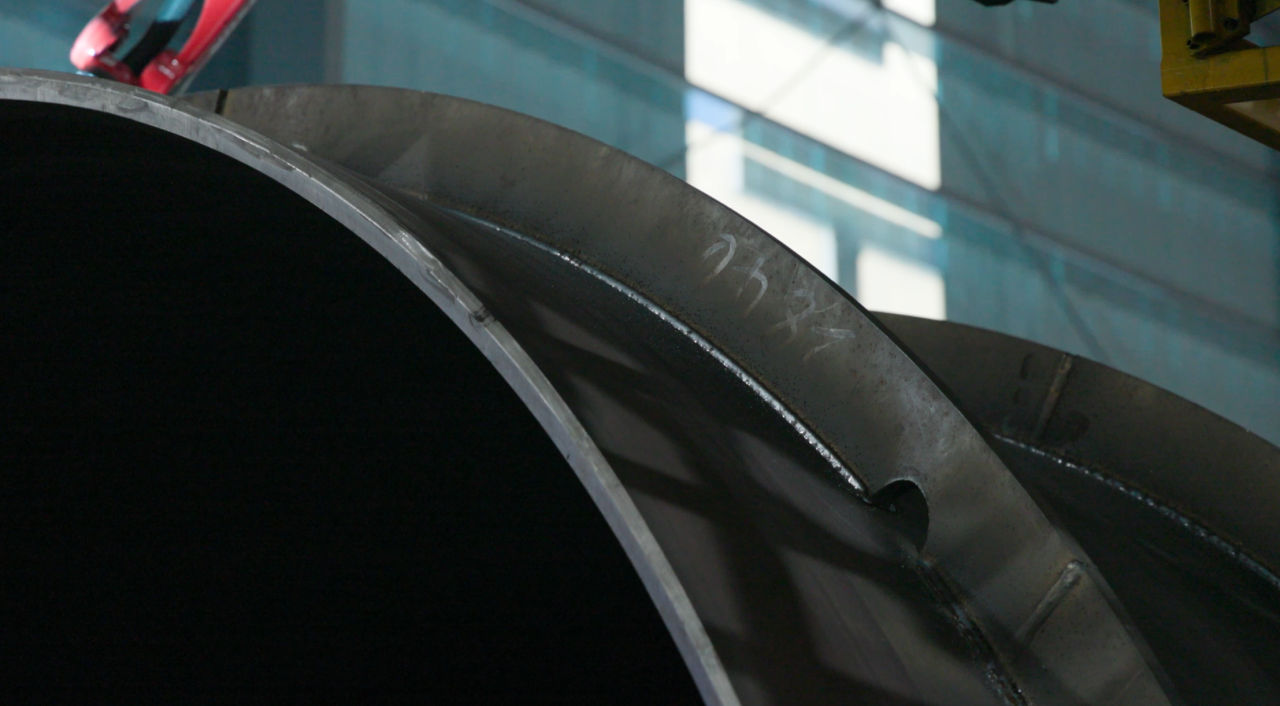
Building on experience gained through multiple major engineering projects, LE Robotics has transformed key steel penstock manufacturing processes into standardized equipment modules.
The company has developed an integrated intelligent fabrication and welding line covering shell plate rolling and fit-up, internal and external longitudinal seam welding, stiffening ring fabrication and welding, and large-section circumferential seam welding. The solution can also be equipped with robotic plasma arc gouging systems for automated weld root removal:
● Shell Plate Rolling and Fit-Up:
A hydraulic and screw-driven alignment and expansion system enables mechanized shell plate rolling, circular adjustment, and fit-up. It helps control critical dimensional deviations, including roundness and longitudinal seam misalignment.;
●Longitudinal and Large-Section Circumferential Seam Welding:
A cantilever-mounted robot performs multi-layer, multi-pass submerged arc welding (SAW). With 3D vision, the system automatically identifies weld seams, tracks them in real time, and adjusts torch orientation accordingly;
● Stiffening Ring Welding:
A cantilever-mounted robot performs gas metal arc welding (GMAW). The vision system automatically identifies and tracks fillet weld seams during welding.。
This solution has already been put into production and successfully passed customer acceptance at a major pumped-storage hydropower project in China. It has also expanded overseas alongside key customers involved in large-scale hydropower projects. Multiple sets of related equipment have been delivered across several projects both in China and internationally.
In addition, embodied AI welding robots designed for manufacturers of hydraulic metal structures have been operating reliably under complex working conditions, including high-altitude environments.
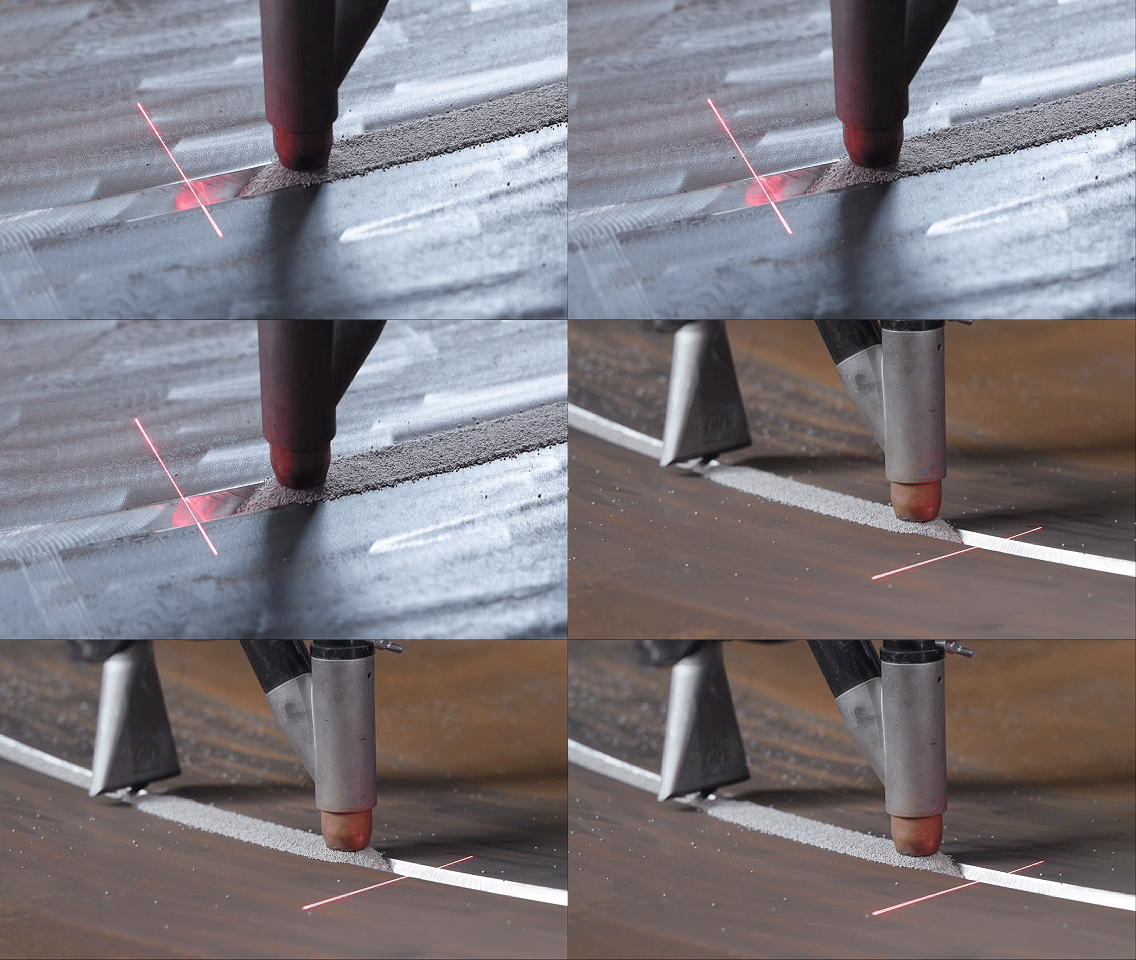
Weld root gouging for circumferential seams is a critical process involving challenges such as thick plates, long weld seams, and continuous operation.
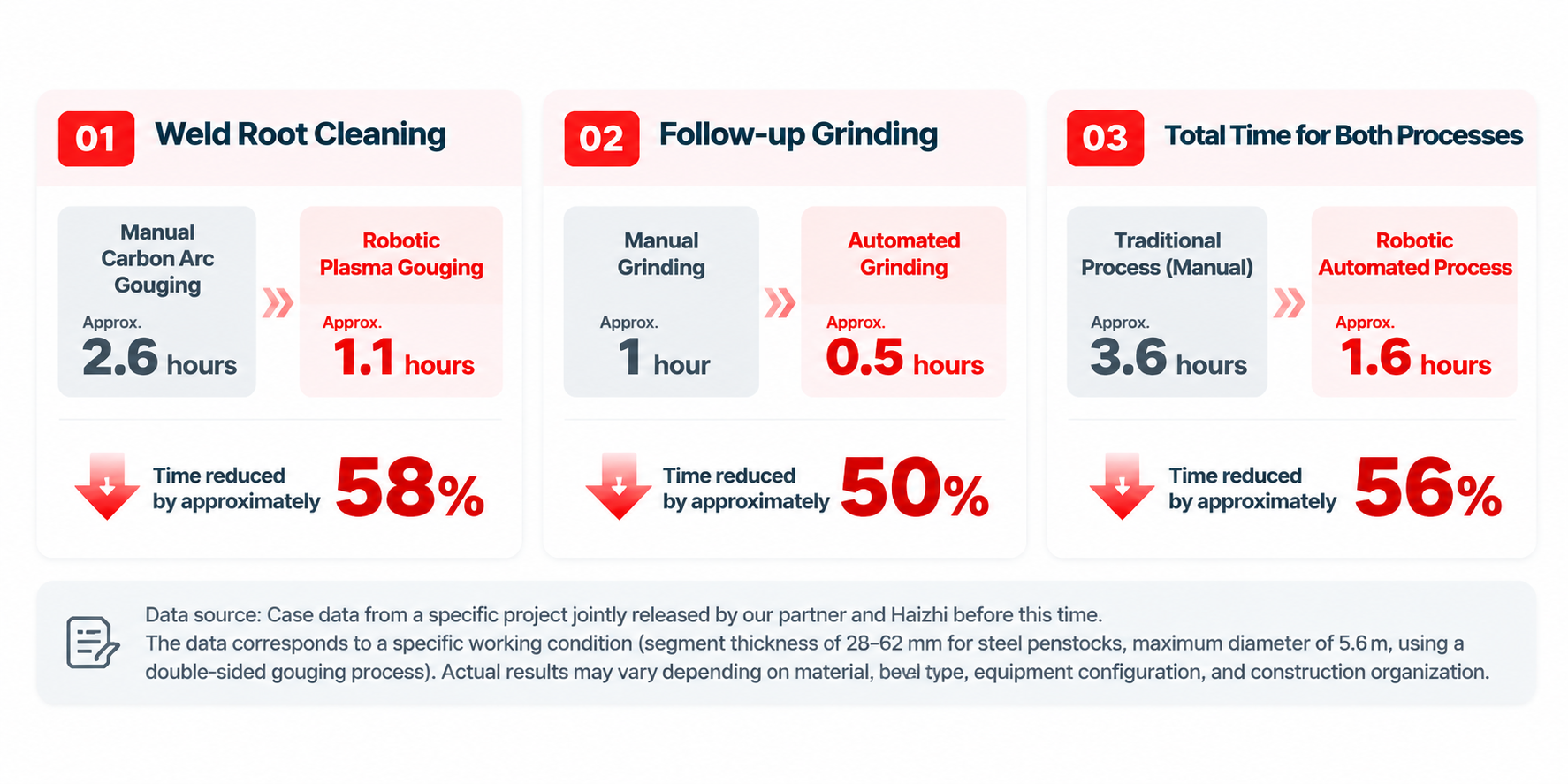
LE Robotics has independently developed a robotic plasma automatic gouging system, equipped with an advanced plasma system. The equipment has already been deployed at the aforementioned pumped-storage hydropower project.
The power station has a total installed capacity of 1.4 million kW (1,400 MW). Its penstock steel-lined sections have wall thicknesses ranging from 28 mm to 62 mm, with a maximum internal diameter of 5.6 m.
In terms of repeat business, a key customer that previously selected LE Robotics for domestic pumped-storage hydropower projects has once again chosen the company to provide an intelligent steel penstock production line for a major overseas hydropower project. The customer has also signed an additional technical service contract for its domestic project. Meanwhile, customers in the hydraulic metal structures manufacturing sector have continued to engage LE Robotics in multiple rounds of cooperation.
As of June 2026, LE Robotics has achieved a product repurchase rate of over 95%.
From standardized equipment modules and the commissioning and acceptance of domestic projects, to the expansion of solutions into overseas projects alongside key customers and continued repeat purchases, LE Robotics has established standardized products, batch deliveries, and proven applications in the specialized field of intelligent manufacturing for large-scale steel penstocks.
Strategic Value
Serving Nationally Significant Infrastructure Through Industrial Embodied AI
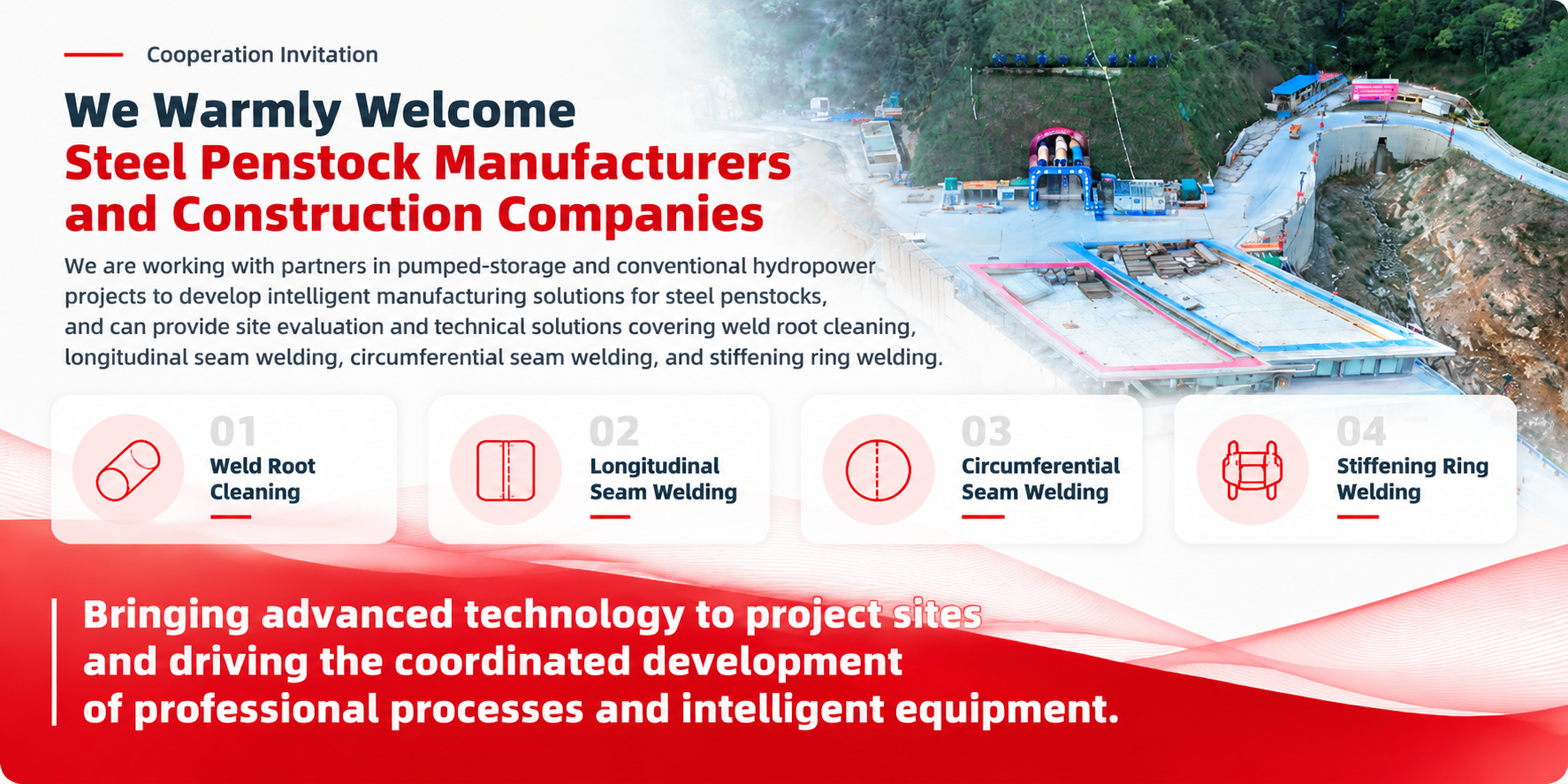
Building on its industrial embodied AI technology framework, LE Robotics continues to consolidate engineering-validated processes—including multi-layer, multi-pass submerged arc welding (SAW) for thick plates, gas metal arc welding (GMAW) for stiffening rings, and plasma gouging—into its RX Welding and Cutting Process Library. These processes can then be rapidly reused in new projects, providing the technological foundation for product standardization and batch deliveries.
Major hydropower and pumped-storage projects are strategically important national infrastructure, while the continued advancement of advanced manufacturing forms a foundation for China's industrial development.
The recommendations for China's 15th Five-Year Plan call for forward-looking development of future industries and the cultivation of new economic growth drivers, including embodied intelligence. The State Council's Opinions on Deepening the Implementation of the “AI Plus” Initiative also calls for accelerating intelligent development across all industrial elements and vigorously advancing intelligent manufacturing equipment.
Applying industrial embodied AI to the intelligent upgrading of penstock manufacturing, a traditional specialized sector, means transforming critical processes that have traditionally depended on individual welders' experience into reproducible and scalable engineering capabilities.
This represents a practical application of AI-driven transformation and upgrading of traditional industries, as well as the development of new quality productive forces in line with local conditions.
LE Robotics will actively respond to national initiatives and contribute to major national engineering projects through standardized products and batch delivery capabilities.
——END——




 川公网安备51018202000335号