




INNOVATIVE BUSINESS MODEL
From Equipment Purchasing to Welding-as-a-Service
(RaaS) | Real-World Steel Structure Welding Operation
Robotics technology determines what tasks can be performed, while the business model determines how these technologies are deployed on the production floor. Robotics as a Service (RaaS) is a business model that offers an alternative to traditional one-time equipment purchases. Cooperation can be structured around individual projects, usage duration, or welding workload, together with corresponding technical and operational support.
The core value of RaaS lies in integrating robotic equipment, specialized expertise, and application services to provide more flexible options for automation adoption, rather than simply changing how equipment costs are paid. The successful deployment of a robotic welding system depends on multiple factors, including equipment configuration, process development, on-site commissioning, personnel training, and ongoing maintenance and support. Therefore, robotics-as-a-service should not be understood simply as equipment rental.
Based on this approach, LE Robotics has introduced Embodied AI Welding-as-a-Service. Built around embodied AI welding robots and intelligent robotic welding workstations, and supported by the RX Welding and Cutting Process Library and a team of specialized process engineers, the offering integrates equipment configuration, welding process development, on-site commissioning, personnel training, and operational maintenance into a comprehensive welding service.
For manufacturers with stable, long-term production requirements, direct equipment purchases and the development of automated production lines remain important options. For companies facing fluctuating orders, seasonal or project-based demand, or those seeking to gradually advance their automation capabilities, a service-based cooperation model can help reduce upfront investment and align automation deployment with actual production schedules.
Equipment sales, customized robotic system solutions, and robotics-as-a-service operations complement one another, together forming a diversified cooperation portfolio through which LE Robotics addresses the varying needs of different customers.
Hu Haojie
CEO and Executive President, LE Robotics

The value of industrial robotics companies in the future will lie not only in the equipment they can provide, but also in their ability to integrate robotic technologies, specialized processes, and continuous services, enabling customers to access intelligent manufacturing capabilities that truly meet their production needs.
RaaS is more than just a business cooperation model. It also opens up a new pathway for the large-scale deployment of industrial embodied AI.

TECHNOLOGY FOUNDATION
Teach-Free, Programming-Free for Rapid Service Replication
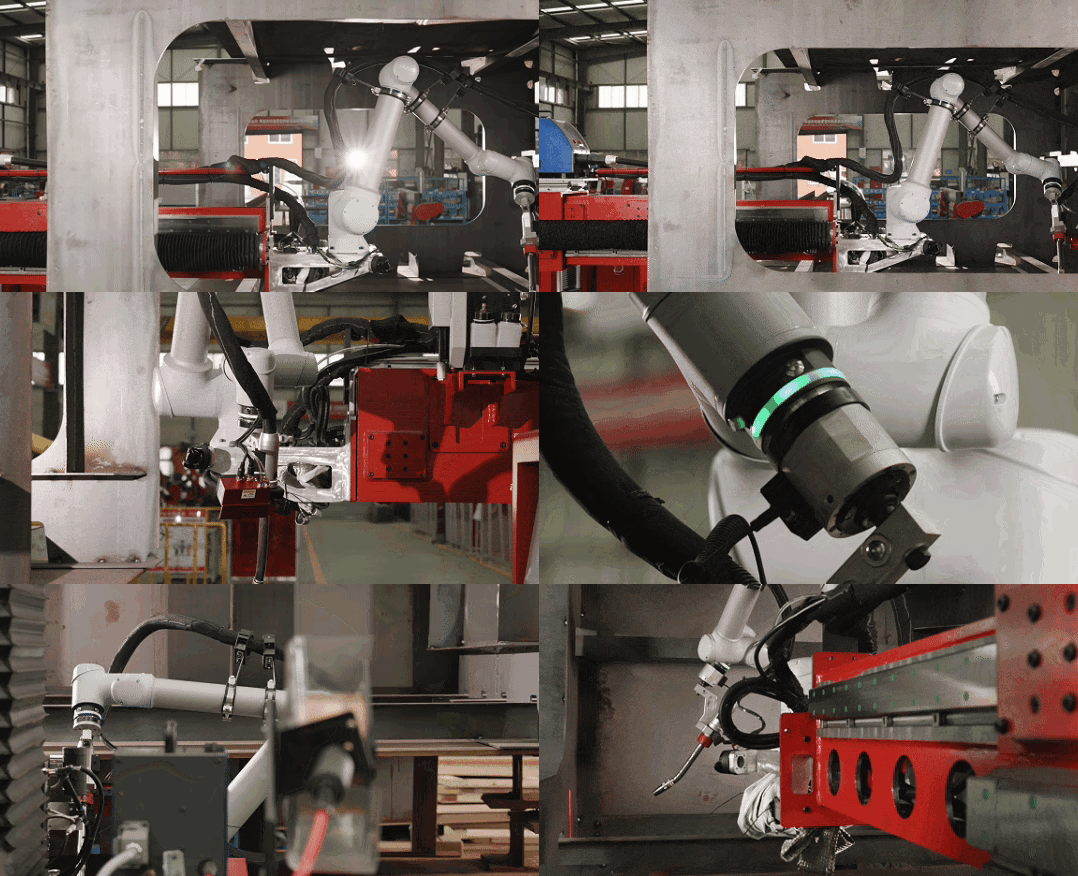
Physical AI-Driven Industrial Embodied AI Welding Technolog
The key to scaling and replicating service-based business models lies in the ability of robots to adapt to the operational requirements of different customers and workpieces. Physical AI enables robots to perceive their physical environments, understand operational tasks, and autonomously execute operations, providing critical technological support for rapid deployment and scalable replication of robotic services.
LE Robotics applies Physical AI to industrial welding and cutting applications, with Industrial Embodied Intelligence at its core. Built around the coordinated integration of the "Hand–Eye–Foot–Brain" architecture, the company has developed a closed-loop technical framework encompassing Perception, Decision-Making, and Execution. Its four core technologies include LE AI, 3D Vision, SLAM-based Autonomous Navigation, and the RX Welding and Cutting Process Library.
From task input, recognition and positioning, and path planning to process selection and welding or cutting execution, the system integrates visual recognition, path planning, and process selection to reduce the need for manual teaching and programming under suitable operating conditions, supporting deployment and changeover across different projects.
At the process application level, the RX Welding and Cutting Process Library has accumulated hundreds of standardized process parameter packages covering materials such as carbon steel, stainless steel, and titanium alloys. These parameters can be intelligently matched and rapidly retrieved according to specific operating conditions.
As of June 2026, LE Robotics' products and solutions have served more than 100 Fortune Global 500 companies, achieved a product repurchase rate of over 95%, and expanded its business coverage to more than 30 countries and regions.
The company continues to advance the application of Physical AI in industrial welding and cutting, building on accumulated experience in project delivery, customer acceptance, and ongoing service support.
APPLICATION SCENARIO
Applying the RaaS Model to Titanium Alloy Welding
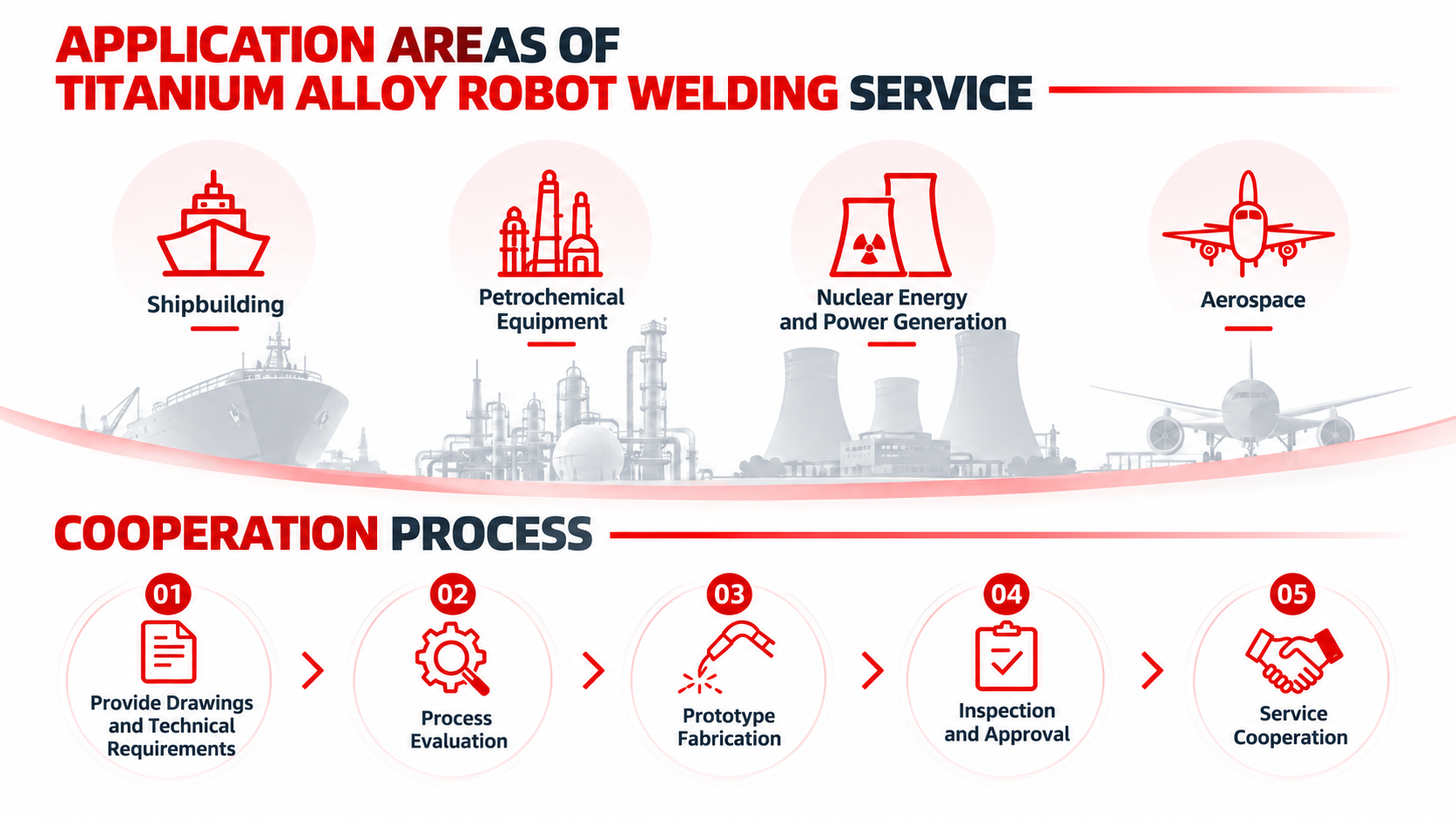
Titanium and titanium alloys are characterized by their high specific strength and excellent corrosion resistance, making them widely used in shipbuilding, petrochemical equipment, nuclear energy and power generation, aerospace, and other industries. However, their welding requirements differ significantly from those of conventional steels. At elevated temperatures, titanium readily absorbs oxygen, nitrogen, and hydrogen. Oxygen and nitrogen can cause embrittlement and reduced ductility in welded joints, while hydrogen may lead to weld porosity and increase the risk of delayed cracking.
To address these challenges, welding typically requires argon shielding gas with a purity of no less than 99.99%, providing comprehensive protection for the molten pool, weld seams and heat-affected zones above 400°C, as well as the reverse side of the weld. Before welding, the groove surfaces and filler wires must be thoroughly cleaned. During welding, heat input and interpass temperature must be carefully controlled. The effectiveness of shielding is also assessed by examining the surface color of the weld and heat-affected zone.
Manual welding relies heavily on individual welder expertise. Skilled titanium welders require extensive training and are in short supply, making it difficult to balance weld quality consistency with production efficiency.
Robotic welding enables programmed control of torch orientation, welding speed, and heat input. Combined with specialized fixtures such as trailing shielding gas systems and back-purge protection devices, as well as 3D vision and relevant process parameters from the RX Welding and Cutting Process Library, robotic systems can support process adaptation and validation for titanium alloy components of different specifications, helping improve weld quality consistency and repeatability.
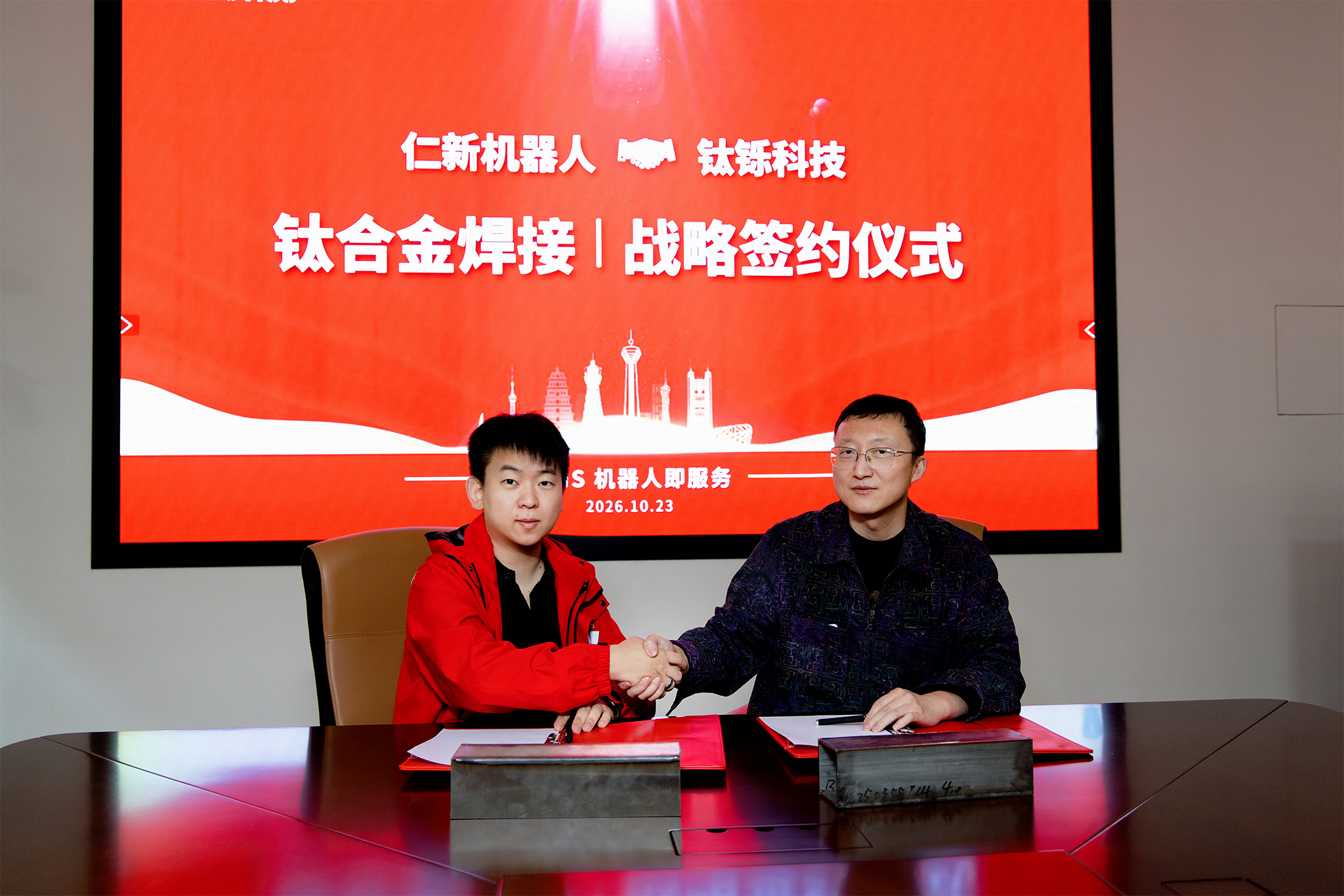
Under the cooperation agreement, both parties will leverage LE Robotics' facilities, intelligent robotic welding workstations, and process R&D capabilities, together with Tishuo Technology's expertise in titanium and titanium alloy welding materials and processes.
Focusing on titanium alloy profiles and components such as TC4 (Ti-6Al-4V), the two parties will conduct phased comparative process validation and prototype fabrication involving specialized deep-penetration TIG welding and conventional automatic TIG welding. The cooperation will gradually extend to the joint development of dedicated welding equipment.
For manufacturers of titanium and titanium alloy components, the cooperation provides a starting point through process validation. The joint technical teams of LE Robotics and Tishuo Technology will develop welding processes and produce prototypes based on customers' typical components. Once the prototypes have passed customer inspection and approval, the parties will determine the appropriate service delivery model according to order volume and delivery schedules. Options include centralized welding at LE Robotics' facilities or deployment at the customer's production site.
This enables manufacturers to access robotic welding capabilities without first having to invest in and build an entire automated production line.
Beyond titanium alloys, industries such as structural steel fabrication, shipbuilding, petrochemical equipment, and pressure pipeline manufacturing also have substantial welding requirements.
LE Robotics will progressively expand the Embodied AI Robot Welding-as-a-Service (RaaS) model, adapting it to the operating conditions and application requirements of different industries.
STRATEGIC VALUE
Advancing Manufacturing Excellence Through Innovative Service Models
The Recommendations of the Central Committee of the Communist Party of China on Formulating the 15th Five-Year Plan for National Economic and Social Development call for forward-looking development of future industries by "exploring diverse technological pathways, representative application scenarios, viable business models, and market regulatory frameworks," while promoting embodied AI and other emerging technologies as new drivers of economic growth.
The State Council's Opinions on Deepening the Implementation of the "AI+" Initiative also call for "advancing the intelligent transformation of all elements of industry" and "vigorously developing intelligent manufacturing equipment."
Often described as the "industrial tailor," welding plays a fundamental role in manufacturing, from major national infrastructure projects to essential industrial facilities. Welding quality and productivity are therefore critical to the foundation of advanced manufacturing.
Embodied AI Welding-as-a-Service represents a practical exploration of the viable business models encouraged by these national initiatives. By applying Industrial Embodied Intelligence to the intelligent transformation of traditional welding processes, and lowering the barriers to adopting advanced equipment through a service-based model, this approach offers a practical pathway for applying artificial intelligence to traditional industry transformation and upgrading, while fostering new quality productive forces.
LE Robotics is committed to responding to national strategic initiatives by placing technological innovation at the forefront of industrial innovation, contributing to the advancement of new industrialization, the development of advanced manufacturing, and China's ambition to become a leading manufacturing powerhouse.
——END——





 川公网安备51018202000335号